


What would you like to read more on in 2026? Let me know in the comments!
US Workforce Trends 💼
Job numbers? Yeah, they’re still being revised down.
Since the government shutdown, data continues to be spotty. Spotty enough for economists to call it “swiss-cheese” data.
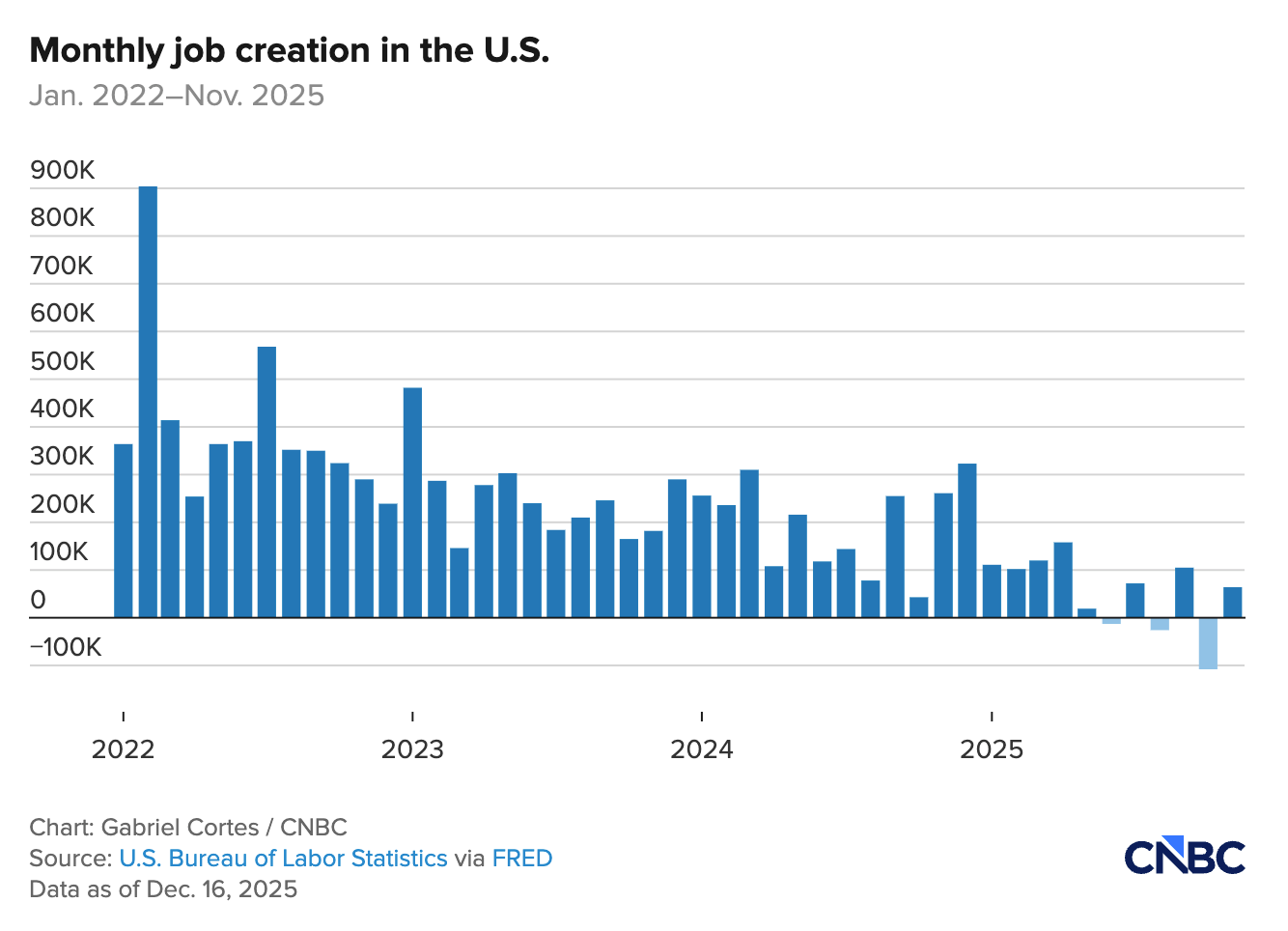
The Bureau of Labor Statistics (BLS) released the employment data for November, claiming 64,000 jobs were added to the economy (46,000 just in healthcare), and the unemployment rate rose to 4.6%, the highest its been since September 2021. They also caught up on October’s numbers, which show the economy lost 105,000 jobs. ALSO, they revised the August and September numbers to show about 30k less jobs than initially reported, mainly in manufacturing and hospitality.
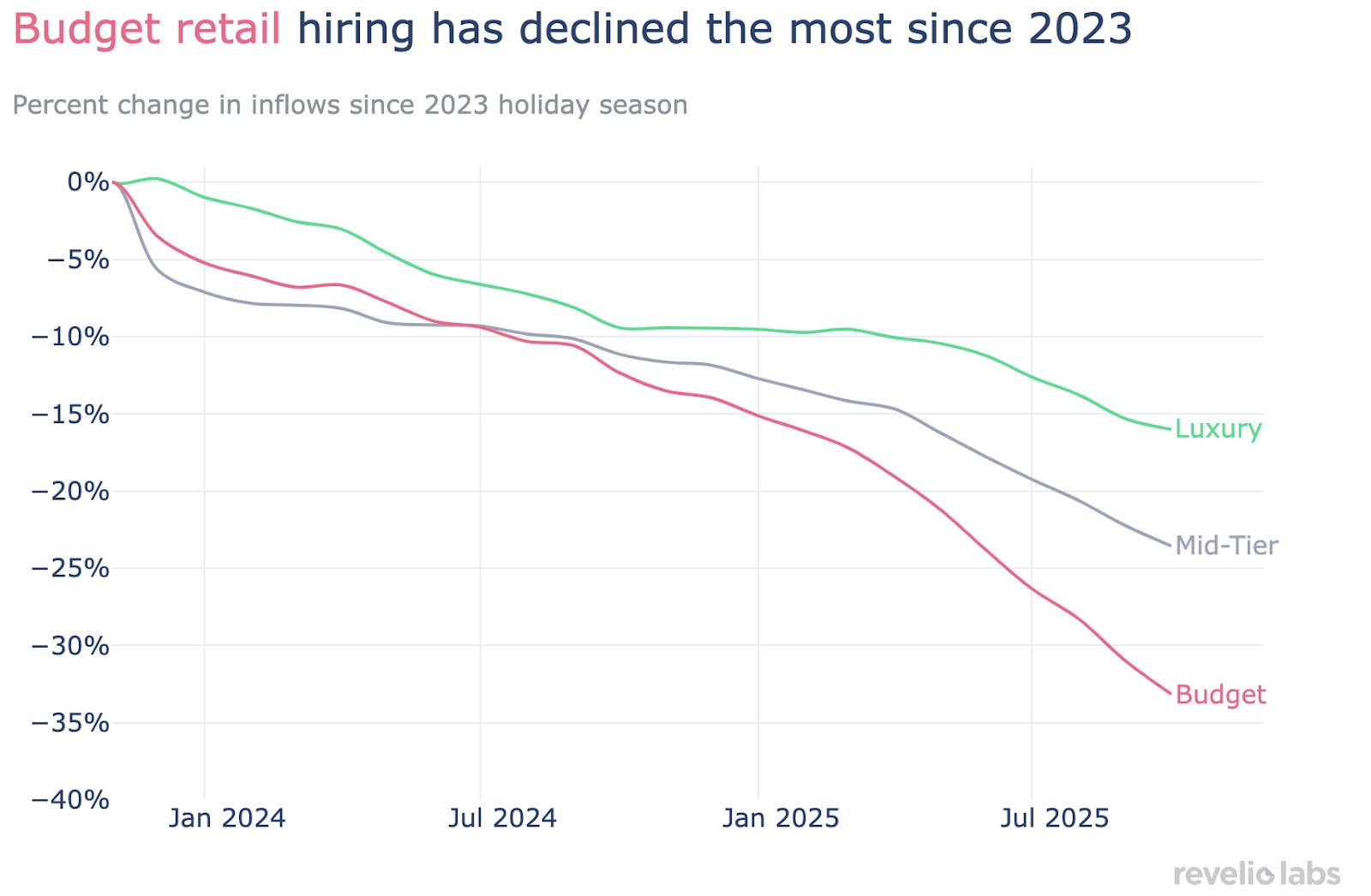
Manufacturing has taken a hit likely due to tariffs, but a drop in leisure and hospitality demonstrates Americans tightening their wallets as price increases get passed on to consumers. Economists are saying this years holiday season had “record-breaking” sales. Much of this was driven by wealthy consumers, with higher sales for luxury brands. Shopping trends are demonstrating a “K” shaped economy, with poorer consumers spending less, while wealthier consumers continuing to spend. The top 10% of earners are responsible for nearly half of consumer spending.
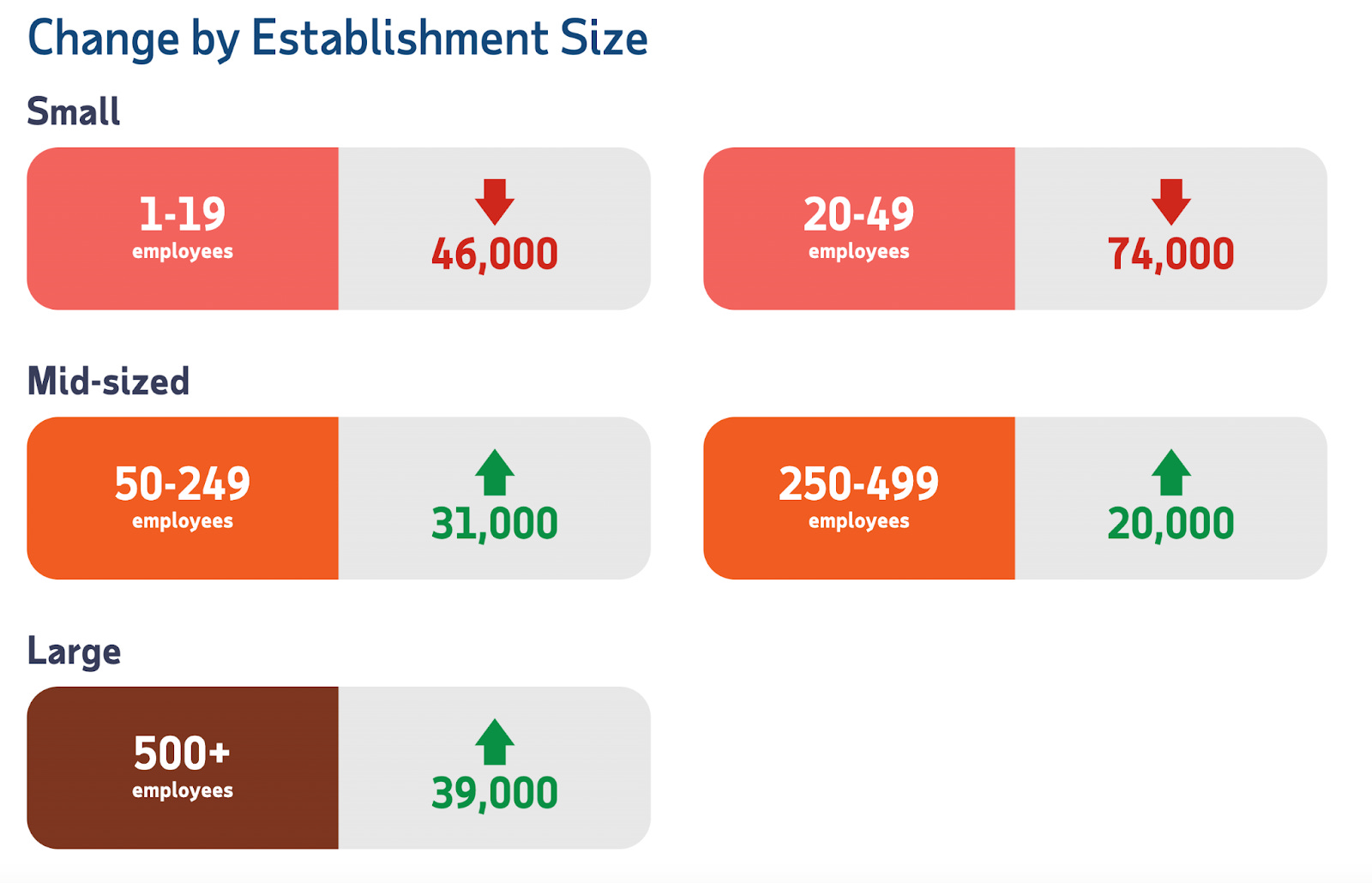
According to the ADP report, the economy lost 32,000 private sector jobs in November, specifically in manufacturing, professional and business services, information, and construction. The slowdown in November was led by small businesses. The impacts on small businesses, or “main street businesses,” are often early indicators of the macroeconomy, as they have less flexibility and resiliency to withstand turbulence. Between August-October, small businesses shed roughly 34,000 job per month on average. This is not good.
Revelio Labs (which reports on private and public jobs) reported 9,000 jobs lost in November, with active job postings declining by 1.9% month-over-month. Education and Healthcare were the only sectors to add significant jobs. Entry-level roles highly exposed to AI (meaning the tasks can likely be automated) have declined by over 40% since January 2023, demonstrating early impacts of AI adoption.
The discrepancies between the different data sets can be confusing, but something worth noting is that in a strong economy, we’re typically adding over 100k jobs per month, so even a slow down in job creation is cause for concern. With the government shutdown and missing data, I’m relying more on private sector data to paint the picture, and it’s looking like we are losing jobs rapidly.
In the past six months, only 100,000 net jobs have been added, and that’s according to the swiss-cheese BLS data. Jerome Powell, the head of the Federal Reserve, said it is more likely we’ve been losing around 20k jobs per month on average, but we won’t know official numbers until sometime next year. Considering they revised the 2024 job numbers to report 900k less jobs than initially reported, this seems pretty likely.
Overall, the economy added 191k jobs in 2025, minus December, compared to 2024, where over 1 million jobs were added in the same time.
The Fed’s chose to lower the federal interest rate to 3.5-375% to address labor market issues, but they don’t anticipate lowering the rate for another few months as they use a wait-and-see approach for more accurate data to come out. Christopher Waller, a candidate for the next Fed Chair — which will be determined sometime soonish hopefully — shared sentiments about how everyone is afraid for their jobs in 2026. Couldn’t agree more, Waller.

Global Scope 🌍
Globally, joblessness remains relatively low, but youth unemployment is rising. Before the pandemic, youth labor force participation (ages 15-24) peaked at around 17%, but has been dropping continuously since then, now hovering around 13%. Across Asia, youth unemployment rates are 2-3x higher than the average. Youth-led protests have swept across Kenya, Madagascar, and Morocco in concern for limited opportunities and the rising cost of living. In 2024, 1.2 million graduates in the UK were competing for 17,000 entry-level positions. In Europe, job instability is a larger issue for youth, with employers opting for short-term contracts and wage stagnation.
While AI integration is a contributing factor — even with Gen Z workers showing eager AI adoption — other concerns include a cooling global economy, corporate caution, and hiring freezes. Entry-level openings are down 29% year-over-year. With a shift toward skills-based hiring, many Gen Z workers are now pursuing blue-collar work and other vocational training programs over traditional university routes.
Work Wins, Woes, & Whoas
Work Wins 🏆
One area of the US which has seen better job stability than the rest of the nation is the Pacific region — especially California. This year, the state launched its “Jobs First Council” to bring together state agencies to coordinate economic development, workforce, education, and infrastructure investments in a shared strategy. Their efforts are targeting high-growth industries such as construction, healthcare, education, advanced manufacturing, clean energy, and defense. A main focus of theirs is expanding apprenticeship opportunities by connecting education, workforce training, and employers through employer-driven training programs. They’re also expanding services to rural regions as well.
Work Woes 📉
The Education Department has announced that they will resume garnishing the pay (taking money directly from paychecks through employer payroll, but they can also withhold tax returns) of borrowers who have defaulted on their student loans, starting in January. Over 3 million federal student-loan borrowers haven’t made a payment in 30-270 days. Once 270 days have passed, a borrower is considered defaulted, which is when wage garnishment can start. Up to 15% of wages can be deducted from a borrowers’ paycheck.
Under federal law, you must be sent a formal notice 30 days prior to garnishment to be given an opportunity to object or respond. They don’t need to make much effort to track you down though, they will simply send it to the last address the Dept. of Ed. had on file for you. If you are worried about your wages being garnished, this article outlines steps you can take to get back on track.
Work Whoas 🚨
In order to avoid the “Sunday Scaries,” some workers are turning them into “Sunday Lock-ins.” This might sound like more hustle culture, but they may have a trick or two when it comes to work-life balance.
Interviewees of Business Insider said that by organizing their week and getting a head start on Sunday, they’re able to free up more of their time during the work week. Knowing what to expect allows them to take more breaks and make plans. Work can also be done more quickly without the interruption of meetings. Working through the weekend has picked up in popularity since the pandemic, when everyone got accustomed to bringing work home with them. Now, people are choosing how they create boundaries and are opting for soft-boundaries and a more fluid balance. By integrating work in ways they control, they’re able to have more balance throughout the week and not just on the weekend.
🔦Career Spotlight🔦
CDL Truck Driver
CDL truck driving roles are expected to grow steadily through the next decade as demand for freight transportation remains strong. While some industries have faced slowdowns and layoffs, trucking and logistics have continued hiring in 2025 due to e-commerce growth and supply chain needs. High-demand areas for CDL drivers include CA, TX, FL, and the Midwest, where major distribution hubs are located. Pay for drivers typically ranges between $57,000-$77,000, with many experienced drivers earning in the six digits.

Becoming a CDL Truck Driver: Most CDL truck driving roles require a valid Commercial Driver’s License (Class A or B, depending on the job), a clean driving record, and completion of a certified truck driving training program. Drivers must meet DOT medical requirements and demonstrate strong safety awareness, time management skills, and reliability. Gaining experience through entry-level or regional driving positions can help drivers qualify for higher-paying long-haul, specialized, or owner-operator roles as they progress in their careers.
Who’s Hiring 🔍
Healthcare - As seen in the data, healthcare continues to lead in hiring and will continue to do so in 2026.
Education - Also seen in the data, education at every level is still hiring. This doesn’t just mean teaching roles — roles are opening up in support and administrative positions as well.
Natural Resources - Everything from mining and natural gas to renewable energy, especially for engineering roles.
Construction - While jobs in construction in 2025 did experience tightening (layoffs), construction is expected to grow in 2026 to accommodate data centers and other infrastructure improvements.

Reader Survey
In case you missed it ⬇️
Oregon’s new “Prosperity Plan” - will we finally prosper?

Oregonians - this one is for you, as most of my reader base is in Oregon, and that’s where I live :) but the topics I’ll be breaking down apply to any state.
Getting blamed is a blessing.

Things begin to change the moment you take accountability for your life.